Noticing New Paths Close to Home
Standing just outside your door, imagine you are a visitor. Instead of heading straight to a familiar destination, scan your surroundings and pay attention to where activity seems to cluster. Listen for dishes clinking, children playing, or conversations drifting from a side street. Look for trees, quieter blocks, or older buildings that often signal spaces where people like to spend time.
Walking slowly in a direction you do not usually choose helps shift your focus. Side streets that once felt like blank gaps on the map may reveal small gardens, playgrounds, or independent cafés set back from the main road. Notice how the feeling of the street changes as you move: traffic noise fades, the air cools under trees, or the architecture shifts from larger buildings to smaller homes.
Small details can hint that people linger nearby. Benches, dogs tied outside a shop, books in a window, and bikes that appear in the same place day after day all suggest a regular stop. These clues help you identify likely resting points or places to weave into a future walk.
Turning separate stops into one line
Once individual spots stand out, the next step is to look for ways to link them. Instead of treating a café, a park, and a market as unrelated points, ask whether they can all fit into a single, relaxed loop.
You might start with a familiar coffee stop and then keep going a few blocks past your usual turning point. Many areas hide a small green space, a school yard, or a plaza just beyond the busiest stretch of shops. From there, you can look for the next modest stop: a convenience store, a bakery, a pharmacy, a community display, or a transit stop.
Over time, you begin to notice strings rather than isolated places: a calm street connecting two open spaces, a path that links a station to several cafés, or a loop that lets you combine a walk, a snack, and an errand without retracing your steps.
| Route idea type | What to look for on the ground | Possible extras to add |
|---|---|---|
| Quiet loop | Tree‑lined side streets, low traffic, benches | Short reading break, people‑watching |
| Errand chain | Shops within a few blocks of each other | Grocery pick‑up, parcel drop‑off |
| Green corridor | Parks, school yards, planted medians | Stretching stop, photo spot |
Using Maps Without Letting Them Take Over
Digital maps can support a neighborhood walk without controlling it. The aim is a light plan that feels reassuring rather than rigid, so most of your attention stays on the street around you instead of the screen.
Sketching a simple plan
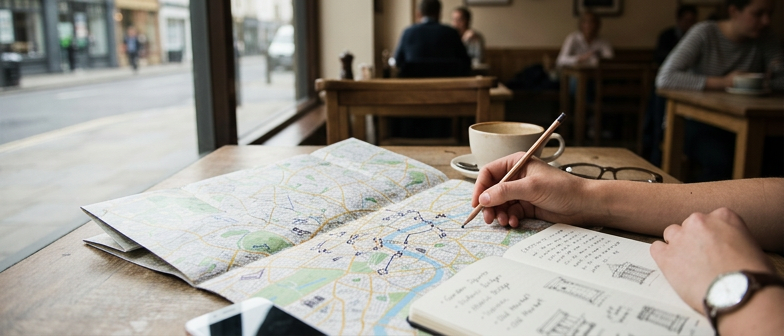
A rough goal is a useful starting point: maybe a half hour outside, or a relaxed stroll to a nearby park and back. Open your map and trace either a loop or a simple out‑and‑back path that meets that goal without becoming complicated.
Look for a few easy anchors: a main road you already recognize, one obvious landmark such as a playground or plaza, and a small number of turns. That level of detail is often enough to avoid frustration while still leaving room to wander. If it helps, capture a quick image of the map so you are not tempted to keep adjusting the route.
Before heading out, spend a brief moment checking for hills, busy intersections, and stretches where sidewalks appear to be missing. Once you have that overview, you can put the phone away and start walking with more confidence.
Staying flexible while you walk
When you are on the sidewalk, the map can sit in the background as a backup, not a constant guide. Follow your basic route but allow small changes: take a side street that looks welcoming or adjust if a crossing seems too congested.
Short check‑ins work better than continuous navigation. If you feel unsure, stop somewhere safe, glance at the map, confirm your next few steps, then walk on. There is rarely a single “best” path, and trying to find one can distract from simply being present in the environment.
Walking with friends or children can be a chance to use simple prompts rather than more directions: “Let’s follow this row of trees until it ends,” or “Let’s walk as far as the next café sign and then turn toward home.” In this way, digital tools support a walk instead of turning it into a task to manage.
Turning Everyday Tasks into a Single Stroll
Linking several small tasks into one outing can change how the whole day feels. Instead of leaving home many times for short trips, you move through the same area once or twice at a measured pace, folding practical stops into a pleasant route.
Choosing one main task as your anchor
Start by choosing one task you need to complete, such as picking up groceries or dropping off a parcel. This becomes the anchor around which everything else can cluster. Then think about what sits between home and that destination: perhaps a café, a library, a park bench, or a local shop you have been meaning to visit.
Instead of planning a straight line there and back, imagine a rounded loop that passes your anchor stop and returns by a slightly different street. This simple adjustment limits backtracking and makes the outing feel more like a small tour than a chore.
Comfortable footwear and a pace that feels natural are important. Supportive shoes can turn a sequence of tasks into an easygoing stroll instead of a rush. If you pass stairways and feel up to it, you might add a single extra flight now and then, or choose to walk down rather than ride an elevator.
Blending movement with work and rest
A day shaped around a few short walks blurs the line between moving and sitting. Walking chats can replace some seated conversations, especially for informal catch‑ups or planning discussions. A gentle loop around the block can provide a break from screens and may help clear your thoughts.
On more demanding days, brief standing breaks, shoulder rolls, and short walks to refill water or step outside for a moment can prevent stiffness between outings. Even a few minutes of movement before or after a task helps you return to your desk with a calmer body and mind.
As more residents in any area choose to handle short tasks on foot, streets can feel more lively and local businesses may experience more casual visits. There is no need for a strict timetable; a loose structure is often enough to keep your day flowing at a steady walking rhythm.
| Outing style | How to structure it | When it tends to work well |
|---|---|---|
| Task‑focused loop | One main stop plus one or two extras | Busy weekdays with limited time |
| Leisure‑first walk | Café, viewpoint, then optional errands | Slower weekends or days off |
| Micro‑break route | Very short loop from home or work | Between meetings or study sessions |
Q&A
-
How can I start a simple neighborhood walking guide without overwhelming myself?
Begin with one or two short, familiar loops and write them down in plain language, not technical directions. Note key landmarks, estimated time, and where to rest. Test the route once, then refine it by removing awkward crossings and adding pleasant pauses so beginners feel confident and unhurried. -
What makes a local landmark route idea more engaging than a basic there‑and‑back walk?
Link several small, recognizable landmarks into a loose circuit instead of a straight line. Include contrast: a plaza plus a quiet street, a viewpoint plus a busy corner. Add optional side spurs to a bakery or riverbank so people can customize their walk without feeling lost or committed to a long trek. -
What are the most important comfortable walking day tips for city residents?
Prioritize soft, well‑fitting shoes, light layers, and a bag that sits close to your body. Plan generous time buffers so you never need to rush. Mix shorter walks with seated breaks, water stops, and flexible endpoints. Small comforts like sun protection and a backup transit option help the day stay enjoyable. -
How can I improve my city map reading basics for short distance travel habits?
Use maps mainly to grasp overall structure: rivers, main roads, transit stops, and green corridors. Before leaving, mentally rehearse just the next two or three turns. Learn common symbols, check north orientation, and cross‑reference with what you see on the ground so the map becomes a quiet support, not a distraction. -
What are some weekend outing route planning and public space exploration ideas?
Pick a loose theme, such as “waterfront spots” or “street art,” then build a modest loop that hits three locations within a comfortable time frame. Include at least one playground, square, or library patio where you can linger. Leave gaps for spontaneous detours, pop‑up markets, or community events discovered along the way.